

“Be German, God help you, but the kind of German your ancestors were when they spread culture with love – as German as your Kuruc ancestors were when they were beating the Austrians, as German as your great-grandfathers were when they were defending the cause of the revolution in 1848, as German as your grandfathers were when they wore Hungarian clothes in the years of oppression after the revolution, and as German as your fathers were when they triumphantly brought Thököly’s mortal remains to Késmárk.” – wrote in 1927 Elemér Kőszeghy-Winkler (1882-1954) , a painter hiding behind the penname K-y-r-r, who played an active role in the Hungarian and German-speaking public life of Levoča, then part of Czechoslovakia.
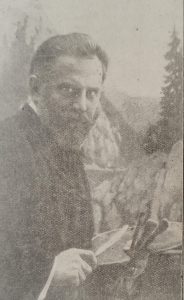
In addition to his involvement in the work of the Historical Society of Spiš County (Zipser Historische Gesellschaft) after the region became part of Czechoslovakia rather than Austria-Hungary, he was one of the founders of the local branch of the Hungarian Cultural Association in Slovensko and in the 1930s he was editor-in-chief of the Szepes Híradó, the only Hungarian-language press product in the region. In this article, Kőszeghy addressed the German-speaking young people who were born in the Szepes area and who not only graduated from the universities of Prague and Brno, but also founded so-called ‘burschenschaft’-s, German student associations, which typically also helped to spread German nationalism. The fact that the romantic admonitions of Kőszeghy failed to impress “the youth, who are the hope of the Hungarian future in Spiš” was due to a number of factors. This paper aims to illustrate, among other things, the attitudes of the former German-speaking inhabitants of the various Slovakian regions between the two world wars.
Although Slovak and Hungarian historiography has gradually moved away from the dead end of national exclusivism by emphasizing coexistence in a shared homeland, I believe that we still face gaps and juxtapositions in the history of the Germans in Slovakia and of the history of the Spiš region. The so-called “Zipser” live in the minds of many in Hungary as the German-speaking but Hungarian-minded town dwellers who are associated primarily with Mikszáth’s novel “The Black Town”. This is no different in the Hungarian echo chambers of Facebook. Yet it should be noted that although the Facebook group called ‘People interested in Szepes county’ is followed by people from Slovakia too, many people from Hungary feel that they can vent their frustration for example by lamenting the use of the Slovak version of Lőcse, which is Levoča, as it hurts their self-esteem, Levoča being ‘a thousand-year-old Hungarian town’. Nota bene: often the person has no ostensible connection with Levoča or any other place in the region. The myths fuelled by the idea of revisionism are still with us today, and part of the purpose of this article is to use the example of this region to illustrate what happened how and why to the German-speaking inhabitants of the area, who had been part of Czechoslovakia and prior to that the Hungarian state.
Felvidék, Slovensko, Die Slowakei
Settlers from the Holy Roman Empire arrived in the northern regions of the Kingdom of Hungary at different times. From winegrowing to mining and metalworking, representatives of many trades found a home in the Carpathian Basin, and were granted privileges by the Hungarian kings after they had established first their settlements and later their towns. By the time the ideology of nationalism, or nation-building, had spread to Central Europe in the 19th century, the region had a remarkable number of “royal free cities”, a status that came with extensive self-government and autonomous administrative rights. Kežmarok, nestled under the High Tatras is a prime example, founded by German settlers and functioning as a royal free city until the region was handed over to Czechoslovakia.
The census data of the time give a rough idea of the regions where the German language was spoken for preference by the local population. The German-speaking areas in Upper Hungary formed four separate blocks at the turn of the 1800s and 1900s: Bratislava and its surroundings, the so-called Hauerland, the Spiš region and the Bereg-Maramures region. The only common point between the people living in these four areas was that most of them used German in everyday life. They had no particular economic or cultural ties with each other on a linguistic basis, and consequently no sense of community or solidarity could develop between the inhabitants of these regions, which were 100-200 km apart each. Not to mention the fact that not only these blocks, but also those living within them, differed from one another considerably in terms of their religious and social stratification.
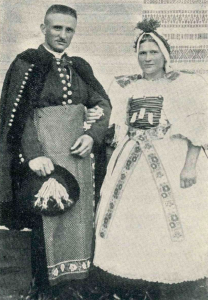
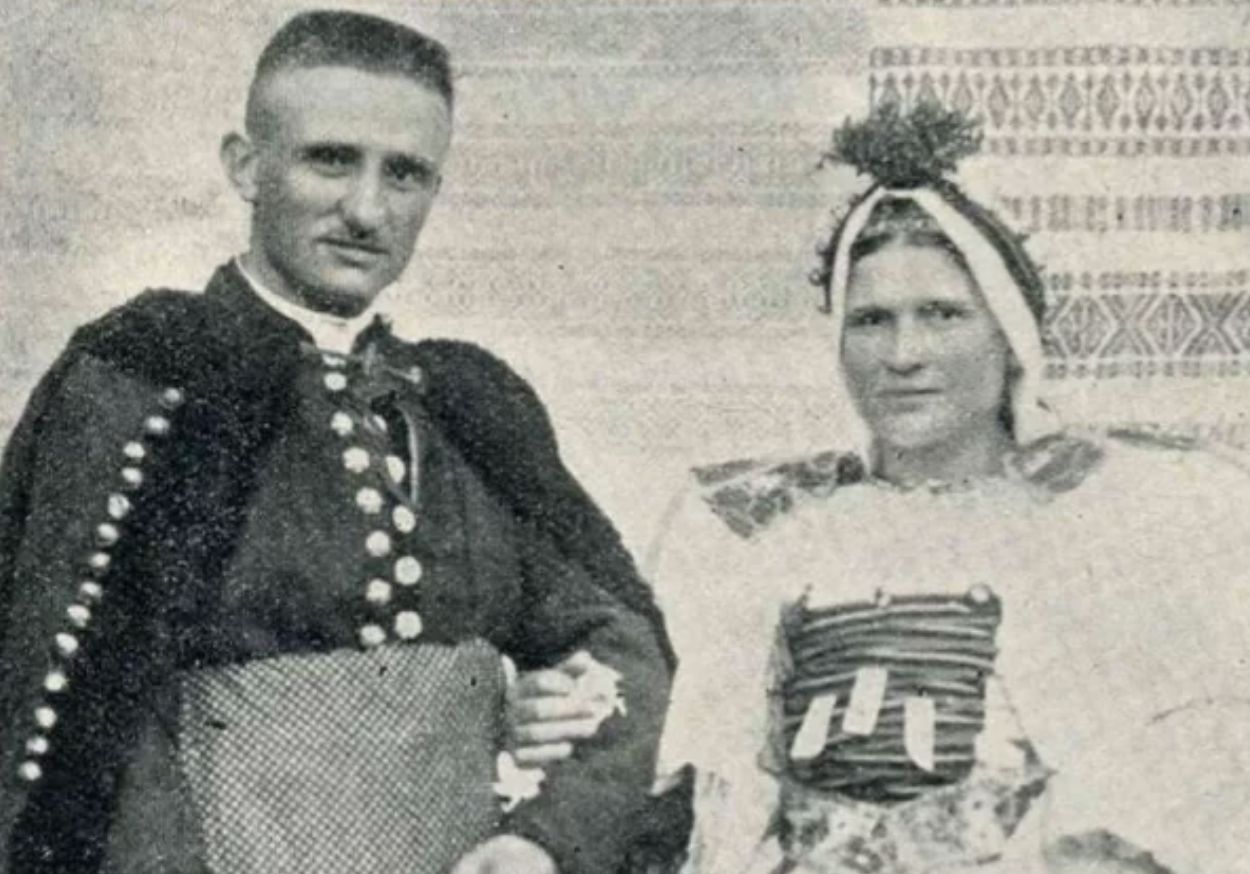
Let’s start our overview with Hauerland! The term originated in the German-language press between the two world wars, and was used to refer to Handlova, Nitrianske Pravno and Kremnica and their surrounding villages, as the German equivalents of some of the village names end in “hau”. Examples include Nitrianske Pravno itself, which is Krickerhau in German, but also Sklené (Glaserhau), Kunešov (Kuneschhau) and Janova Lehota (Drexlerhau). Although ‘hau’ originally refers to the cutting and processing of wood, the everyday life of the inhabitants was dominated by mining and metalworking during the 19th and 20th centuries, and the majority of the population was Roman Catholic. Society in the eastern part of Spiš county was more complex, with the urbanised societies of Kežmarok, Levoča and Spišská Nová Ves playing a prominent role in the region’s civilisation, but Hungarian historiography tends to forget that there are many agricultural villages in the Poprad river valley where German-speaking people lived. These settlements were, of course, inhabited not by city-dwellers but by smallholders, who were not particularly interested in big words and ideas, but rather in how to provide their families with their daily bread. The Hnilec river valley in the southern part of Spiš, and the villages of Štós, Medzevand those along the Upper Bodva where metalworking and knife-making were traditional, also showed a similar social landscape to Hauerland. To complicate matters, the majority of the German-speaking citizens of Spiš were Lutheran, with a minority of Jews, which had a lot to do with public organisation between the two world wars. The third territorial unit could not even be considered a German-speaking ‘island’, as the use of Hungarian and Slovak in addition to German also enriched the public life of Bratislava/Pressburg, where local citizens were more likely to identify themselves as “Pressburger” (Bratislava citizen) than using a language-based or national label. In the royal free cities of Upper Hungary, this type of local patriotism was at the time a rather typical phenomenon, and the towns of the Spiš region were no exception. In short, the German-speaking inhabitants of the four relevant northern regions of the Kingdom of Hungary had a different attitude towards their surroundings, the world, God and the state. The arrival of the Czech legionnaires in November and December 1918 not only brought them into contact with a new reality, but also with new actors who were claiming more and more space for themselves in ‘Slovensko’, as the territory would be referred to.
Self-determination is what, exactly?
Sunday, October 23, 1938. The German army had crossed the former border of Czechoslovakia under the Munich Agreement nearly a month earlier. The month of October 1938 saw fierce emotions and feverish preparations as the political leaders of the Slovak autonomous government and Hungary tried to negotiate in Komarno the extent of the transfer of territory to the latter. Not only in the southern, Hungarian-inhabited part of the new country of Czechoslovakia, but also in Spiš, there were some people who wanted a different fate for the region. As parishioners in Kežmarok, Poprad and Spišské Podhradie were walking to church, posters with the words “Wir fordern die Selbst-Bestimmung für die Zips!” (We demand self-determination for the Zips!) could be seen in the streets. After the publication of President Woodrow Wilson’s famous 14 points in 1918, “self-determination” became a magic word in Europe as defined by the Versailles peace treaty. A magic word that rarely contained specifics, but could be used all the more to mobilise people. The posters were originally commissioned from a printer in Kežmarok, by a brewer from Poprad, who was a local representative of the Spiš German Party (Zipser Deutsche Partei). What was his goal? And what is the Zipser Deutsche Partei?
Let’s pick up where we left off. When the Aster Revolution triumphed in Budapest in October 1918, the Austro-Hungarian Empire collapsed overnight, and foreign soldiers invaded Hungary, the Czech threat was met by the response of the elite of Spiš, loyal to the Hungarian state. More specifically, Tibor Kéler, a member of the National Workers’ Party in the parliament for Kežmarok, which had been in power before the Aster Revolution, described his vision of ‘Respublica Scepusia’ in the pages of the local weekly newspaper, the Karpathen Post. The Republic of Spiš he envisioned would be based on the principle of ‘self-determination of peoples’ and he believed that the tourism and heavy industry in Spiš could make this ‘Switzerland under the Carpathians’ self-sufficient, and otherwise it would belong to Hungary in constitutional terms. Kéler’s idea was also adopted by Gyula Andor Hefty , a teacher and mountaineer, who expressed the need for a “Zipser Republik” to Oszkár Jászi, the minister responsible for nationality affairs in the Budapest government. The troops of the Czechoslovak legion reached the western border of Spiš by the first days of December 1918 and waited for developments. However, no new state was proclaimed at the assembly of the Spiš Germans on 9 December, and the invaders, meeting no particular resistance, finally entered the county. Hefty and Kéler did not give up, and after the Treaty of Saint-Germain brought Tomáš Garrigue Masaryk one step closer to realising his dream, the two activists from Kežmarok began to organise a political party. This was the aforementioned Zipser Deutsche Partei, which held its launching meeting in March 1920 and a month later stood in the Czechoslovak parliamentary elections together with the National Christian Socialist Party.
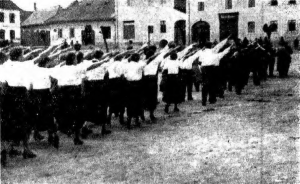
For the time being, the idea of “self-determination” and the Zipser Republik was put on the back burner, as other means had to be used to counter the aspirations of the nation-state in the new Czechoslovak Republic. Since the constitution of “Masaryk’s republic” considered Czechoslovakia as “the state of the Czechoslovak nation”, this very definition of the majority delineated who were the minorities. This in a country that surpassed most Central European states of the time by operating a parliamentary democracy with free assembly and a vibrant civil sphere, albeit President Masaryk’s informal influence on the government through the inter-party alliance known as the Pětka (Committee of Five) somewhat teints the picture. Up till 1927-28 the Zipser Deutsche Partei was the party in the Slovensko region with the largest network that defined itself as German. However, it could not grow beyond regional coverage, which would have impressed the government circles in Budapest. This had consequences, as the political parties of the Sudeten Germans living in the Czech-Moravian border region established local branches in Bratislava, ranging from the oppositional Nationalists to the Democratic Freedom Party, which appealed to the urbanised, Jewish bourgeoisie and was led by Bruno Kafka, Franz Kafka’s cousin. As far as Sudeten Germans were concerned, not only their political formations, but also themselves, were present in the daily life of the communities of the Slovensko region, working as teachers in some schools where German was the language of tuition. However, a German-speaking merchant from Knifemark, nostalgic for the recognition and prosperity he had experienced in the Austro-Hungarian Monarchy in the 1920s found it hard to tolerate a Sudeten German teacher, glowing with German national pride, teaching his child songs about the greatness of a unified pan-German Reich. Kőszeghy wrote about this generation. They looked upon their Zipser fathers as having lost all sense of reality. And the parents, labelled ‘Magyarón’ at the time, called the ‘ungrateful’ Sudeten Germans ‘Hergelaufener’, which in could best be translated as a kind of ‘rootless immigrant’. The generation gap was further widened by the conflict in the German political scene in Slovakia, when a party split took place in the Zipser Deutsche Partei.
In the shadow of the Swastika
“We are not a swastika group, but we sympathise with the ones that are. We sympathise with Hitler because we see Hitler as a national hero, because he gave jobs to so many unemployed people and turned a disorganised Germany into an orderly empire.” – said Rudolf Klekner, then 22, who had studied law in Prague in 1934. The German-speaking young man was born in Jaklovce, graduated from the German Real Gymnasium in Levoča and during his university years he came into contact with various German (and German-speaking) circles. Together with some fellow students from Spiš, he decided to form an organisation of German-speaking young people from the region, which resulted in the teachers at the Levoča grammar school being confronted with swastikas in the classroom, either drawn or engraved. Klekner told the above-quoted sentences to the Czechoslovak authorities, as he was under arrest for engaging in anti-state activities. Although the “scout association” he led was banned, Klekner was not deterred. After his years in Prague, he became an assistant to Géza Payer, a lawyer and hotel owner in Poprad, and he also became active in the local branch of the Karpathendeutsche Partei (Carpathian German Party) in the second half of the 1930s.
Wait a minute! So there is another German party in Slovakia. Where did it come from? How does it differ from the Zipser Deutsche Partei? The answer to this question can be found by going back to the mid-1920s, when the results of the 1925 parliamentary elections forced several political formations to take sides. After Antonín Švehla, the leader of the victorious Agrarian Party, wanted to form a bourgeois right-wing government by leaving out the Czechoslovak Social Democrats, a member of the Pětka, the minority parties became more and more important every day. An electoral coalition between the Sudeten German Bund der Landwirte (Farmers’ Union) and the Hungarian National Party led by the landowner József Szent-Ivány, among others, won the seat of Andor Nitsch, then chairman of the German Party of Spis. However, this joint German-Hungarian faction proved to be short-lived, after the Sudeten German agrarians entered the government, while Szent-Ivány and Nitsch remained in opposition. A number of factors influenced this outcome, which created discontent within the Zipser Deutsche Partei. In Švedlár a group led by an industrialist of Olomouc origin broke away from the party and founded the Karpathendeutsche Volksgemeinschaft (Carpathian German People’s Community), which from 1928 was known as the Karpathendeutsche Partei.
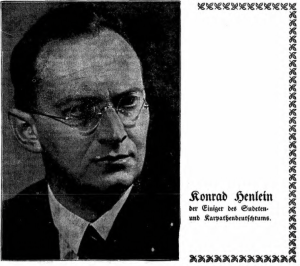
What did the new party’s supporters want? From 1929 onwards, they formed an electoral coalition with the aforementioned Bund der Landwirt, which meant that in the years to come their communication was distinctly pro-government. They were most consistent in promoting their views on German national unity. The Carpathian German Party, whose centre of gravity shifted to Bratislava from the 1930s onwards, promoted the idea of a united German community whereby all German-speaking people in Slovensko should come under the umbrella of a German unity party. Naturally, this threatened the regional interests of the German Party of Spiš. The political history of the two rival parties also needs to be explained, as they gradually came to define not only the people who were involved in their politics, but also everyday social interaction. This was most vividly illustrated in 1938, when the ‘Pressburgers’ and ‘Zipsers’ were opposed by the ‘Carpathian Germans’. In 1935, the Carpathian German Party, having entered into an alliance with the Sudeten German Party led by Konrad Henlein, became definitively part of Hitler’s plans. While Nazi Germany gradually put pressure on Czechoslovakia between 1935 and 1938, the ‘Carpathian Germans’ also gained ground, and by the spring of 1938 they were openly promoting National Socialist ideology. A striking example of political polarisation was an incident on 24 September 1938, when a German-speaking farmer in Holumnica near the Poprad River, threatened the local Lutheran pastor, who was also German. “Where is the Reverend? (…) This will lead to war, I will kill the reverend!” Johann Wawrek, a farmer, said this as he was escorting his son to the railway station because general mobilisation had been ordered in Czechoslovakia due to the German threat, and Wawrek’s son was called up. Pastor Adalbert Alexy was an ardent member of the Karpathendeutsche Partei, who regarded Wawrek, the farmer, as a ‘Bolshevik’. And while German radio broadcasts were loud with ‘Beneš wants war’, in fact British leaders believed they could still appease the insatiable Führer’s appetite. We know in hindsight what this led to.
Szabolcs Czáboczky
Common past: knowledge to dispel historical misconceptions – supporting the work of Slovak and Hungarian history teachers through print and online publications, professional conferences. A project of the Association of History Teachers and the Hungarian-language newspaper of the Denník N news portal. (2023-2-HU01-KA210-SCH-000169882)
Funded by the European Union. The information and statements contained herein are those of the author(s) and do not necessarily reflect the official views of the European Union or the Tempus Public Foundation. Neither the European Union nor the funding authority can be held responsible for them.