

Claim:
The losses of the 2. Hungarian army are comparable to those suffered at Mohács in 1526
Rebuttal:
A doni vereség áldozatainak aránya jóval a mohácsi alatt maradt, a katonák negyede halt meg.
The number of those lost at the eastern front was significantly lower, about 25% of the soldiers perished.
In detail:
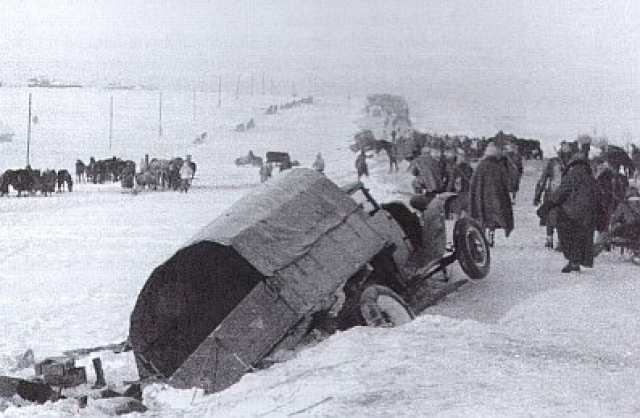
Based on the extent of loss of life it was not ’a second Battle of Mohács’. There, in 1526, about 70% of the 24-thousand-strong Hungarian army perished, while out of the cc. 210 thousand soldiers of the 2nd army 42 thousand died in January-February 1943, partly in battle, partly freezing to death. As opposed to the 70% at Mohács this is „only” 25%. Even if we add the 26 thousand POW and the 28 thousand wounded, we are still below 50%. In contrast, the cc. 260 thousand German soldiers in the region of Stalingrad were completely encircled and only 42 thousand were evacuated by plane, 90% of whom were wounded. 107 thousand were taken prisoners, only 4 thousand of which ever came back. That is, the German troops suffered much more serious losses than the 2nd Hungarian army, while if we look at the Soviet side, fighting the Hungarians was no easy matter for them either: the Voronezh Front lost 33 thousand who died and 61 thousand who got wounded during its attacks, about half of which happened in fights against the Hungarians. Hungarian losses reached dramatic heights only in the case of the forced labourers (mostly Jews) – practically every second person in their numbers fell or was taken prisoner. That is, a forced labourer had about 50% chance to get home from the eastern front, while a private had cc. 75%. There is only one reasonable explanation for this discrepancy: that the Hungarian army was deliberately neglectful when supplying of the forced labour troops. Which would not have been strictly inevitable: contrary to popular beliefs, forced labour duty was not a kind of ’mobile execution site’ – looking at the entire duration of the war we can say that a person had significantly more chance to survive in a forced labour unit than as a private.
Common past: knowledge to dispel historical misconceptions – supporting the work of Slovak and Hungarian history teachers through print and online publications, professional conferences. A project of the Association of History Teachers and the Hungarian-language newspaper of the Denník N news portal. (2023-2-HU01-KA210-SCH-000169882)
Funded by the European Union. The information and statements contained herein are those of the author(s) and do not necessarily reflect the official views of the European Union or the Tempus Public Foundation. Neither the European Union nor the funding authority can be held responsible for them.