

Claim
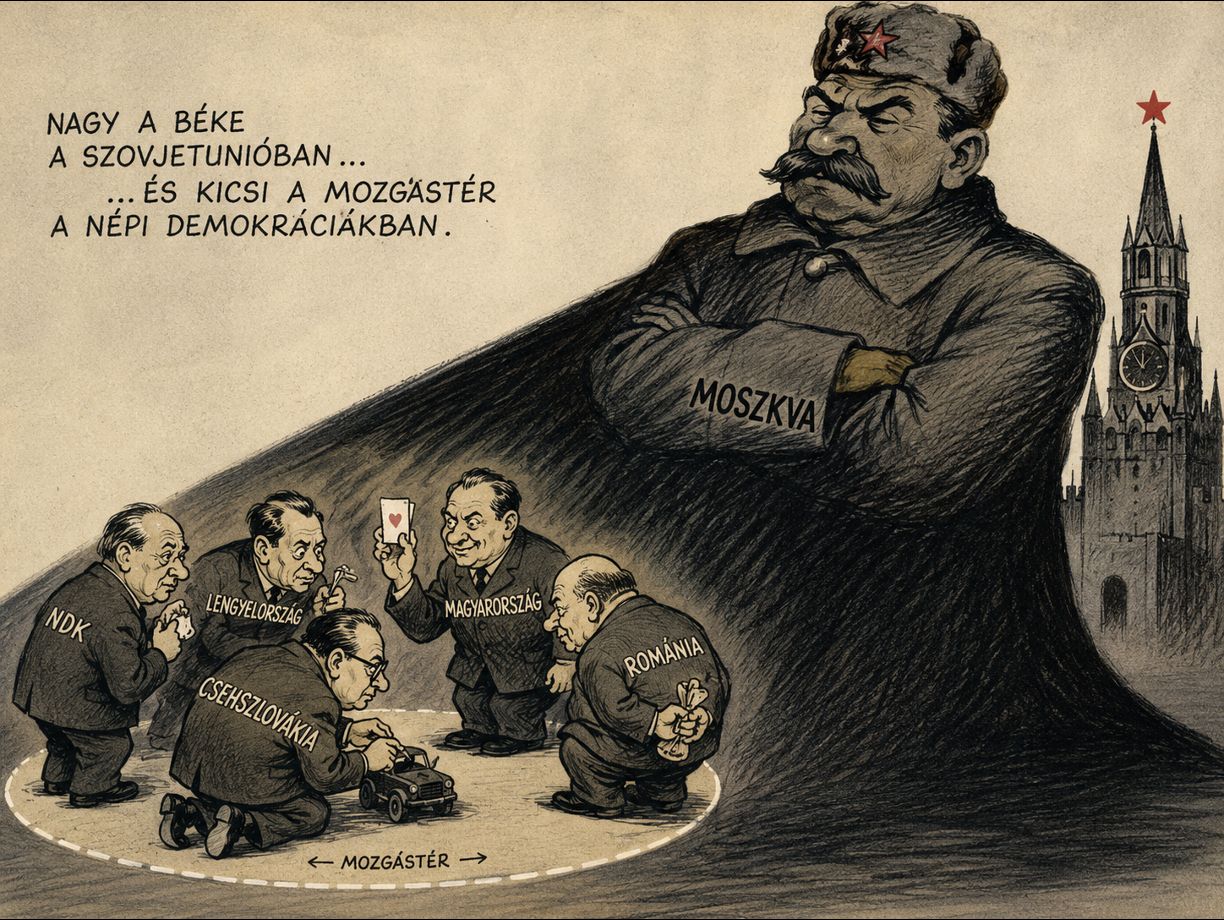
The countries of the Eastern Bloc merely carried out Moscow’s orders in every matter.
Short Rebuttal
Contrary to popular belief, the countries within the Soviet sphere of influence were not simply passive executors of Moscow’s directives. Although their sovereignty was severely constrained by the Soviet Union, they periodically enjoyed limited bargaining power and political autonomy in both domestic and foreign affairs, which their leaders exploited to varying degrees.
Explanation
The history of the Cold War is usually presented through the rivalry between the two superpowers, the United States and the Soviet Union. This perspective, however, should not obscure the fact that the smaller states of the Eastern Bloc were not merely passive victims of great-power politics. Although their freedom of action was sharply curtailed after 1945, their leaders were at times able to pursue and defend their own national interests.
Following the Second World War, the countries of East Central Europe became part of the Soviet sphere of influence. The presence of Soviet troops, the communist takeover of political power, and economic dependence left them with little scope for an independent foreign policy. Moscow made it clear that it was prepared to defend its sphere of influence by force if necessary, as demonstrated by the suppression of the Hungarian Revolution in 1956 and the Prague Spring in 1968.
Soviet dominance, however, did not mean that the leaders of the socialist states had no room for manoeuvre. In 1961, East German leader Walter Ulbricht successfully persuaded the Soviet leadership that constructing the Berlin Wall was necessary, despite the considerable international risks it posed for Moscow. After the suppression of the 1956 Hungarian Revolution, Hungary gradually secured greater economic and social autonomy than most other socialist countries. Romania likewise pursued an increasingly independent foreign policy: in 1968 it refused to participate in the military intervention in Czechoslovakia and openly diverged from the Soviet position on several important issues.
The significance of the smaller states became especially apparent during the final years of the Cold War. Political reforms in Poland, together with the success of the Solidarity movement, and Hungary’s democratic transformation set in motion developments that undermined the stability of the entire Eastern Bloc. Hungary’s decision to open its border with Austria in 1989 enabled thousands of East German citizens to leave for the West, accelerating the fall of the Berlin Wall and, ultimately, German reunification.
The history of the Eastern Bloc therefore cannot be reduced to the simple implementation of Soviet will. Although the countries of the region were far from equal actors in international politics, their leaders were at times able to shape the functioning of the bloc and even played a significant role in the process that ultimately led to its collapse.
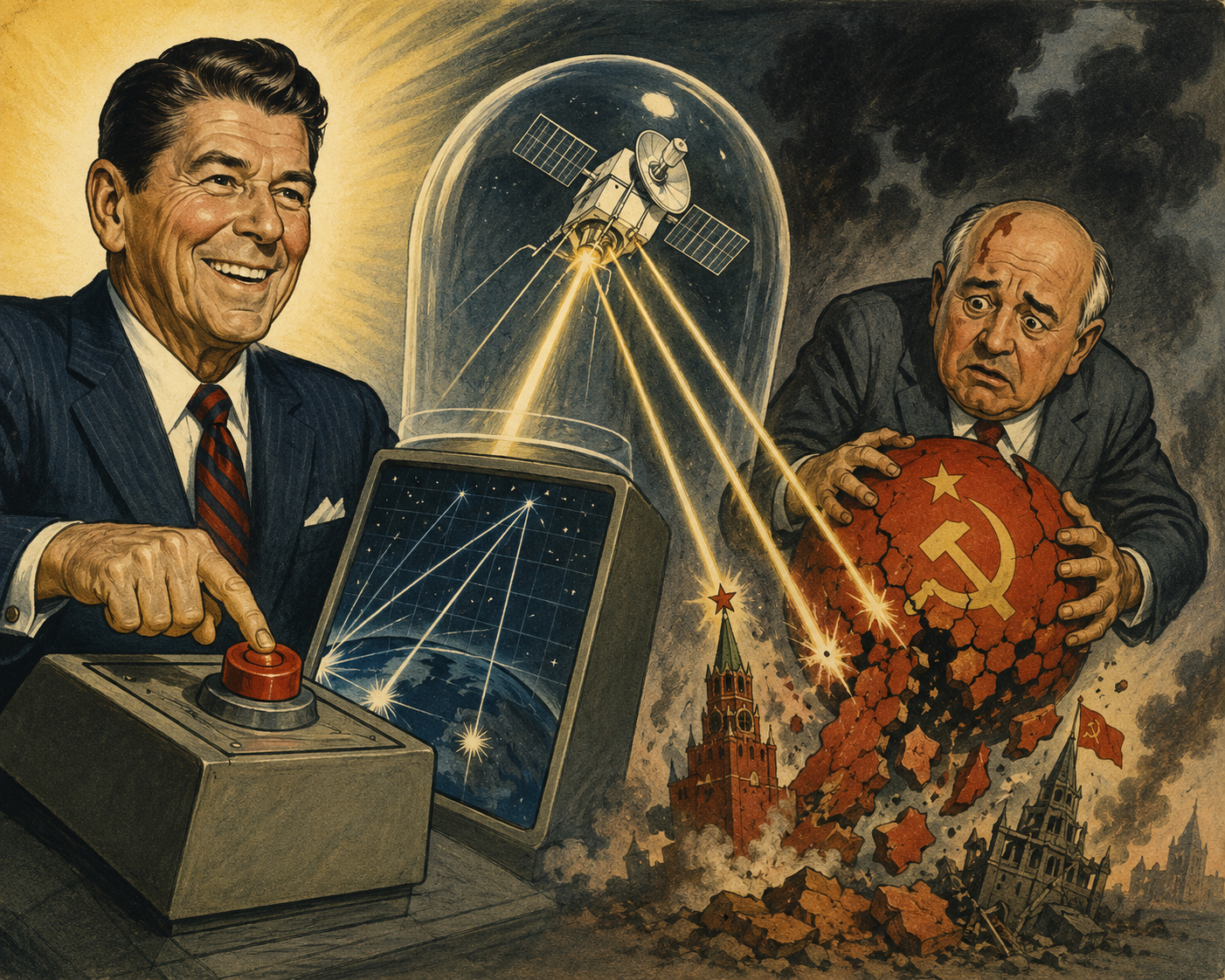
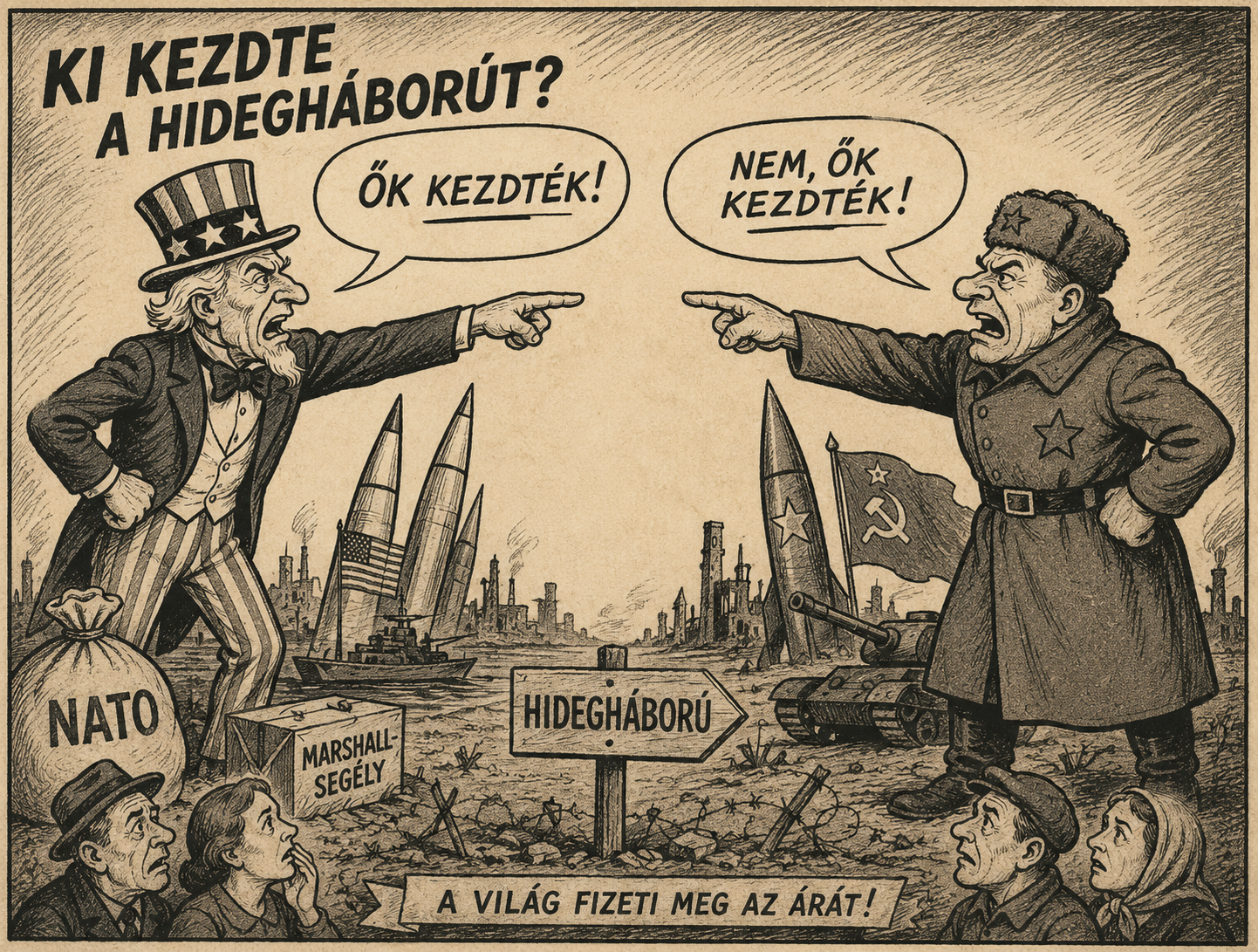
The cover image is intentionally playful: created with the assistance of ChatGPT, it simultaneously evokes the iconic visual language of the Cold War while subtly subverting the familiar imagery and clichés of 1950s propaganda with a touch of irony.