

Who Started the Cold War?
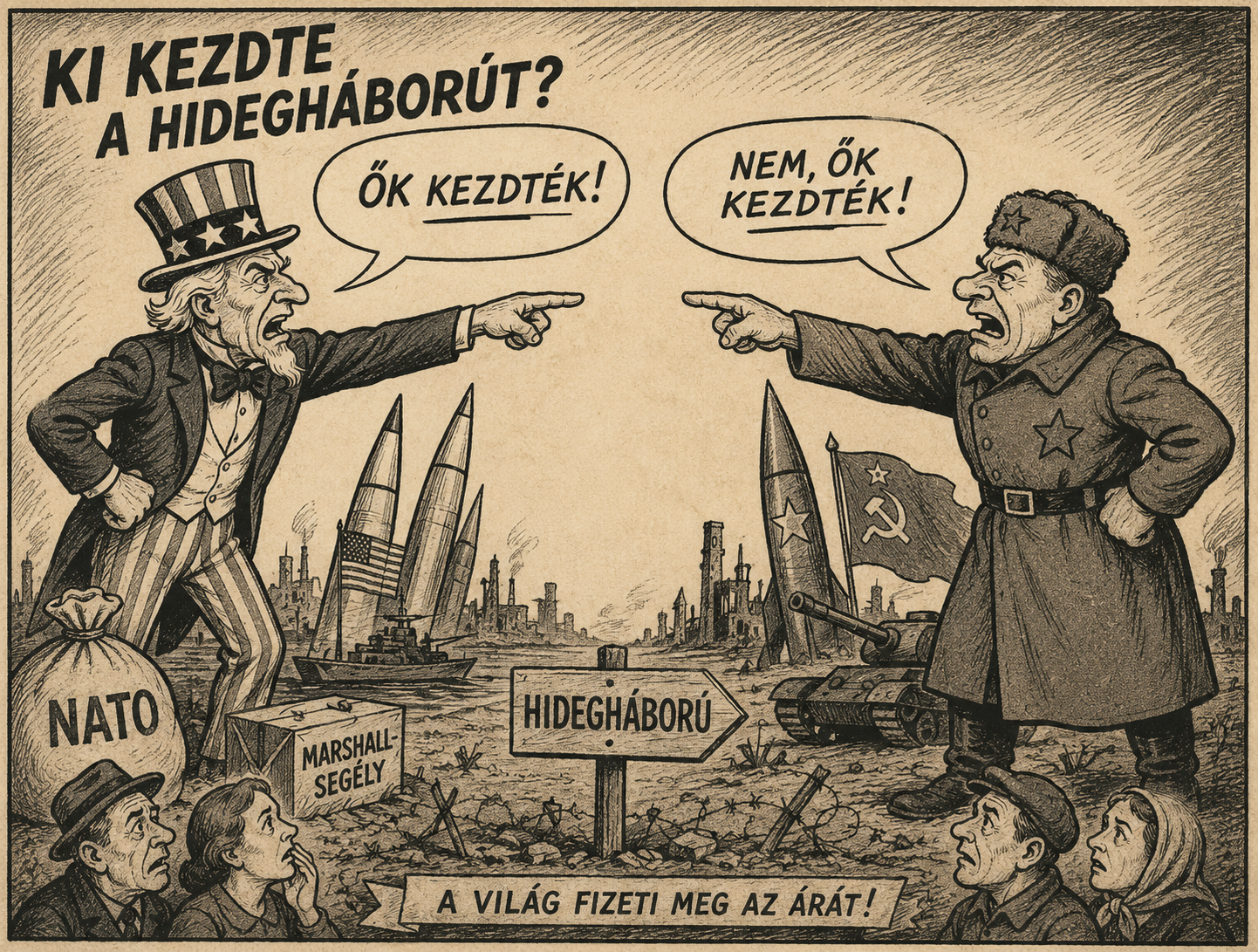
If we asked today who started the Cold War, many people would probably answer without hesitation: the Soviet Union. Others, however, would argue that the United States also played a significant role. Historians have therefore debated for decades when the Cold War actually began and which side bears the greater responsibility.
This debate is important because it concerns not only the deterioration of relations between Washington and Moscow. It also shapes how we interpret the Sovietization of Eastern Europe, including Hungary. If the Cold War is seen primarily as the consequence of Soviet expansionism, then the establishment of the communist dictatorship in Hungary appears as part of Stalin’s deliberate imperial strategy. If, however, the conflict is understood mainly as the result of mutual great-power rivalry, Sovietization can be interpreted partly as a consequence of the emergence of the two opposing blocs. Thus, the debate over the origins of the Cold War is also a debate about whether Hungary’s Sovietization was inevitable.
The Traditional Interpretation: Stalin Was Responsible
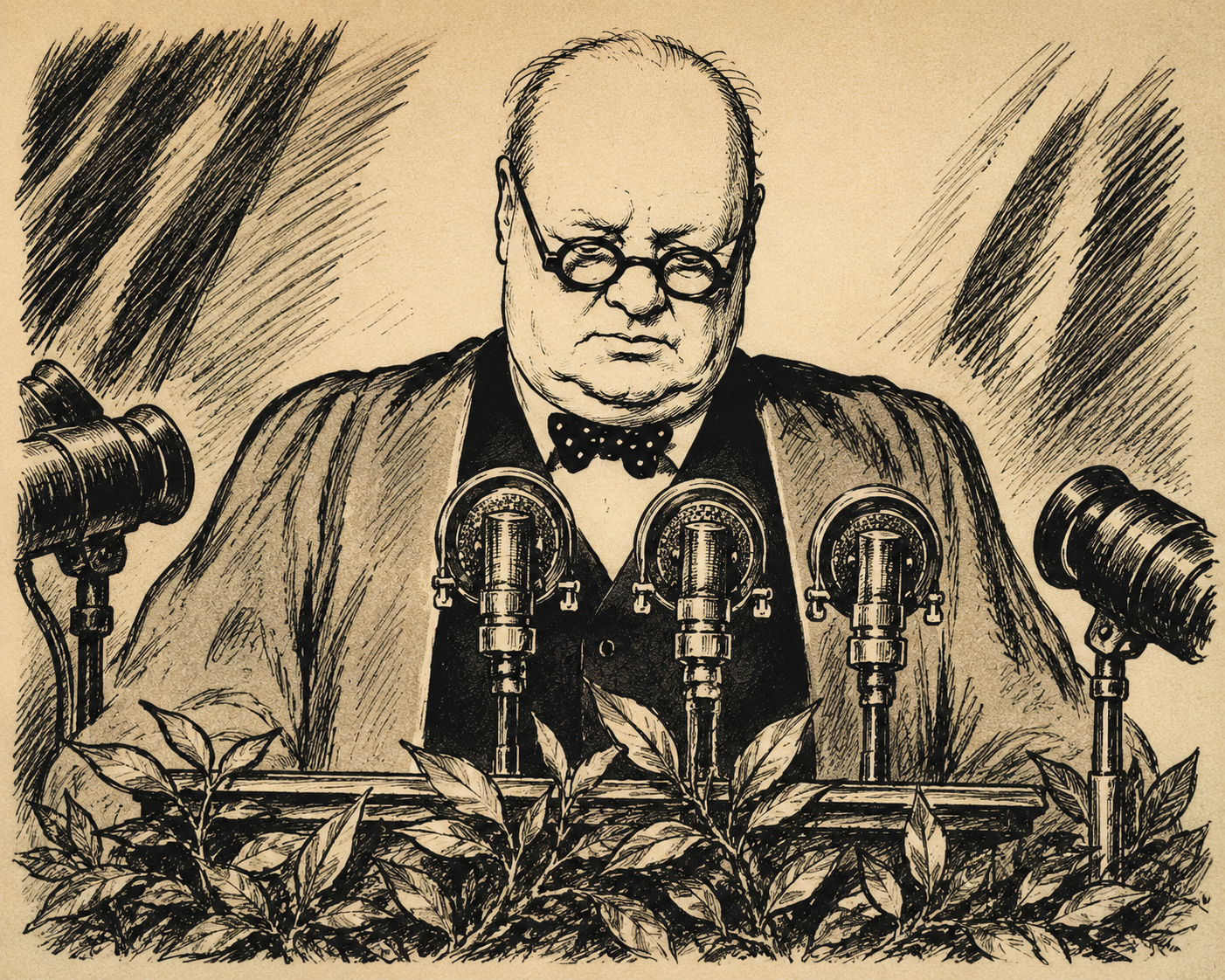
The oldest Western interpretation argues that the Cold War was fundamentally caused by the Soviet Union. Its symbolic beginning is often associated with Winston Churchill’s 1946 “Iron Curtain” speech in Fulton, Missouri, in which he declared that an “iron curtain” had descended across Europe.
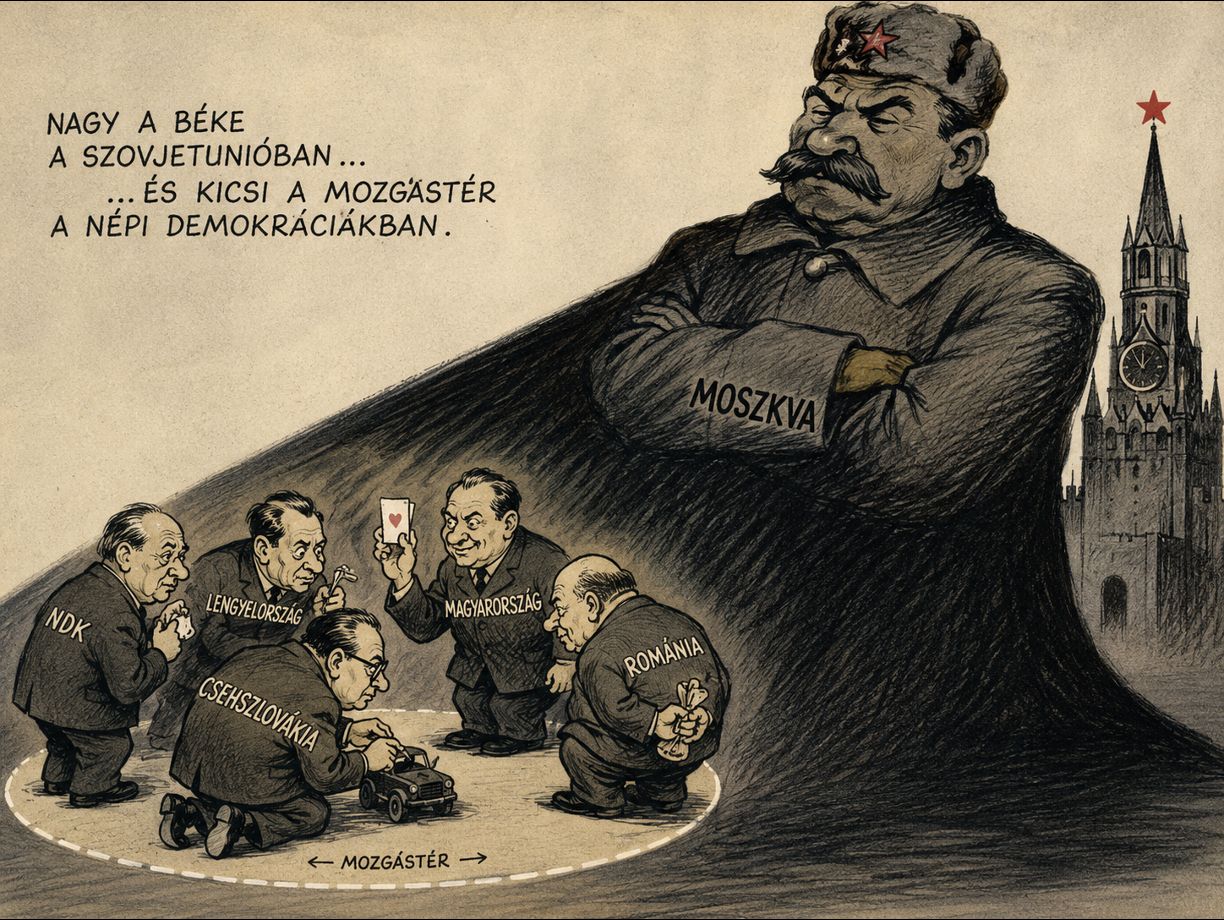
According to this view, Stalin was not satisfied with the sphere of influence gained after the Second World War. Communist dictatorships were gradually established throughout the Eastern European countries occupied by the Red Army, while the Soviet Union sought to expand both its ideological and political influence. In this interpretation, the United States and its allies merely reacted to Soviet expansion.
The Revisionists: The United States Was Not Innocent Either
During the 1960s, a very different interpretation emerged within Western historiography. Revisionist historians argued that the Cold War was not simply the result of Soviet expansionism.
In their view, the United States sought to extend its own economic and political influence after the Second World War. An important instrument of this policy was the Marshall Plan, which served not only to rebuild Europe but also to consolidate the Western economic system. According to the revisionists, the Soviet Union responded by tightening its control over Eastern Europe.
The revisionist school had a major impact on Cold War scholarship by drawing attention to the economic and strategic motivations behind American foreign policy. Since the 1990s, however, following the opening of Soviet archives, many revisionist arguments have been reassessed. The newly available evidence indicates that Stalin had already decided by the end of the war to consolidate the Soviet sphere of influence and fundamentally transform the political systems of Eastern European states. As a result, the revisionist interpretation is now regarded as a minority position.
The Middle Ground: Both Sides Shared Responsibility
By the 1970s and 1980s, a more balanced interpretation had become dominant. Its best-known representative was John Lewis Gaddis.
According to the post-revisionist approach, the Cold War did not result from the actions of one side alone. The two superpowers viewed each other with deep suspicion while each sought to increase its own security. Yet every attempt by one side to strengthen its position appeared threatening to the other, producing an escalating cycle of tension.
At the same time, Gaddis emphasized an important distinction between the roles of the two powers in Europe. Whereas the United States maintained its presence in Western Europe largely with the consent of local governments, the Soviet Union preserved its dominance in Eastern Europe through military and political coercion.
For this reason, contemporary historians often speak of a “new traditionalist” approach. While acknowledging that American policies also contributed to rising tensions, most scholars now conclude that the primary responsibility for the outbreak of the Cold War lies with Stalin’s foreign policy objectives and the violent Sovietization of Eastern Europe.
Not Every Cold War Crisis Was the Same
The distinguished Hungarian historian Csaba Békés has approached the issue from a different perspective. He argues that it is essential to distinguish between genuine Cold War crises and what he calls pseudo-crises.
Genuine crises were events that truly endangered the strategic balance between the two superpowers. Examples include the Korean War, the Berlin crises, and the Cuban Missile Crisis, during which the possibility of nuclear war became a real danger.
By contrast, such Eastern European events as the East German uprising of 1953, the Hungarian Revolution of 1956, the Prague Spring, and the Solidarity crisis in Poland, although of enormous significance to the countries concerned, did not fundamentally alter the strategic balance. Both superpowers tacitly accepted that these countries belonged to the Soviet sphere of influence.
Was Eastern Europe’s Fate Already Decided?
According to Csaba Békés, the Sovietization of Eastern Europe should not be understood solely as a consequence of the Cold War. In his view, the region’s fate was essentially determined in 1944, when the Red Army advanced into Eastern Europe. The following years represented less a dramatic seizure of power than a gradual adaptation to the Soviet political model.
After Stalin’s death, the two blocs remained rivals, but they were also forced to cooperate on a number of issues. The process of détente began in the mid-1950s, culminating in the 1975 Helsinki Conference, which confirmed the international acceptance of Europe’s postwar borders.
This interpretation is particularly important for Hungarian history because it suggests that the establishment of the communist regime resulted primarily from the military occupation of Hungary by the Red Army rather than from the Cold War itself. The subsequent development of the Cold War consolidated this situation rather than created it.
Is There a Final Answer?
Today, historians generally agree that the policies of both superpowers contributed to the emergence of the Cold War. Nevertheless, mainstream scholarship—especially since the opening of the Soviet archives—has increasingly concluded that the principal driving force behind the conflict was Stalin’s policy and the transformation of Eastern Europe into a Soviet sphere of influence.
For this reason, the question “Who started the Cold War?” is not merely a debate in diplomatic history. It also fundamentally shapes our understanding of Hungary’s post-1945 history. If Sovietization is regarded as one of the causes of the Cold War, then the establishment of Mátyás Rákosi’s dictatorship was not simply a by-product of great-power rivalry but one of its principal catalysts and earliest consequences. If, on the other hand, the Cold War is understood primarily as a product of mutual distrust between the superpowers, then the communist takeover in Hungary appears as one element of this broader international process. Thus, the debate over the origins of the Cold War is simultaneously a debate about how we interpret Hungary’s postwar history.
References
- Békés, Csaba. Détente and Emancipation. Budapest: Osiris, 2019.
- Gaddis, John Lewis. We Now Know: Rethinking Cold War History. Hungarian edition. Budapest: Európa Publishing, 2001.
- Hahner, Péter. “The Historiography of the Cold War.” Rubicon, 2019, nos. 2–3.
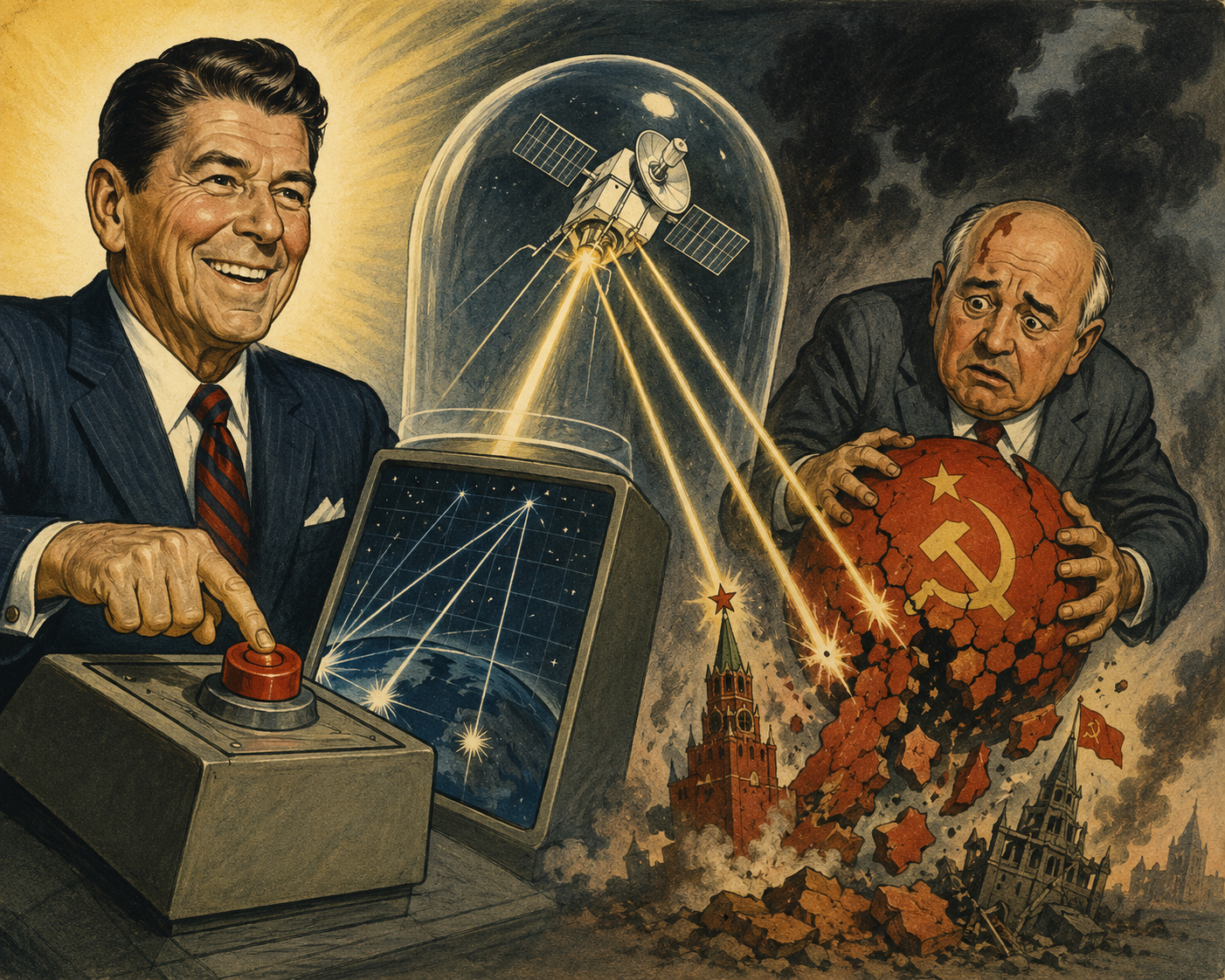
The cover image is intentionally playful: created with the assistance of ChatGPT, it simultaneously evokes the iconic visual language of the Cold War while subtly subverting the familiar imagery and clichés of 1950s propaganda with a touch of irony.