

Claim:
The 2nd Hungarian army was poorly equipped and hardly resisted the Soviets
Rebuttal:
The army was properly equipped as much as it was possible and fought fiercely
In detail:
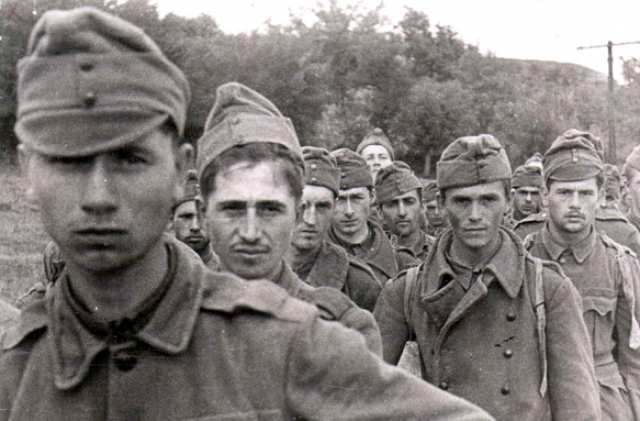
The myth was around for several decades that the 2nd army was a write-off, it was practically sent to the front as cannon fodder, and that’s why it hadn’t even been equipped properly. (About the origin of this myth see here.) In fact, this army had been given 50% of the arms supply of the country and they were sent to the front in the hope of success on the battlefield. They were equipped as well as the possibilities of the country allowed it – the fact that this was much poorer than the conditions would have made it necessary is a different question. For example, the army had hardly any efficient anti-tank weaponry, the troops could only annihilate tanks in close combat. Still, during the first three days of the battle out of the 132 Soviet tanks attacking from the Uriv bridgehead 83 were taken out. The Hungarian resistance at the bridgehead took the Soviets 5 days to eliminate, in very costly combat. True, the defences of the Hungarian army collapsed within a week and while withdrawing, it lost almost 100% of its heavy and some 70% of its light weaponry. However, the Soviet operational plans had not set out this – they had set the task of encircling and annihilating the entire army, which didn’t happen. This can only be explained by the heroism of the Hungarian troops, and if we take into account the conditions under which they had to fight, the extraordinariness of their performance comes fully to light. Those manning the first line only abandoned their positions when they ran out of ammunition. However, they only had a chance to make it back home if they remained in formation and carry out the orders they had been given.
Common past: knowledge to dispel historical misconceptions – supporting the work of Slovak and Hungarian history teachers through print and online publications, professional conferences. A project of the Association of History Teachers and the Hungarian-language newspaper of the Denník N news portal. (2023-2-HU01-KA210-SCH-000169882)
Funded by the European Union. The information and statements contained herein are those of the author(s) and do not necessarily reflect the official views of the European Union or the Tempus Public Foundation. Neither the European Union nor the funding authority can be held responsible for them.