

Claim:
During the Kádár era, national sentiment could not be expressed in culture.
Rebuttal:
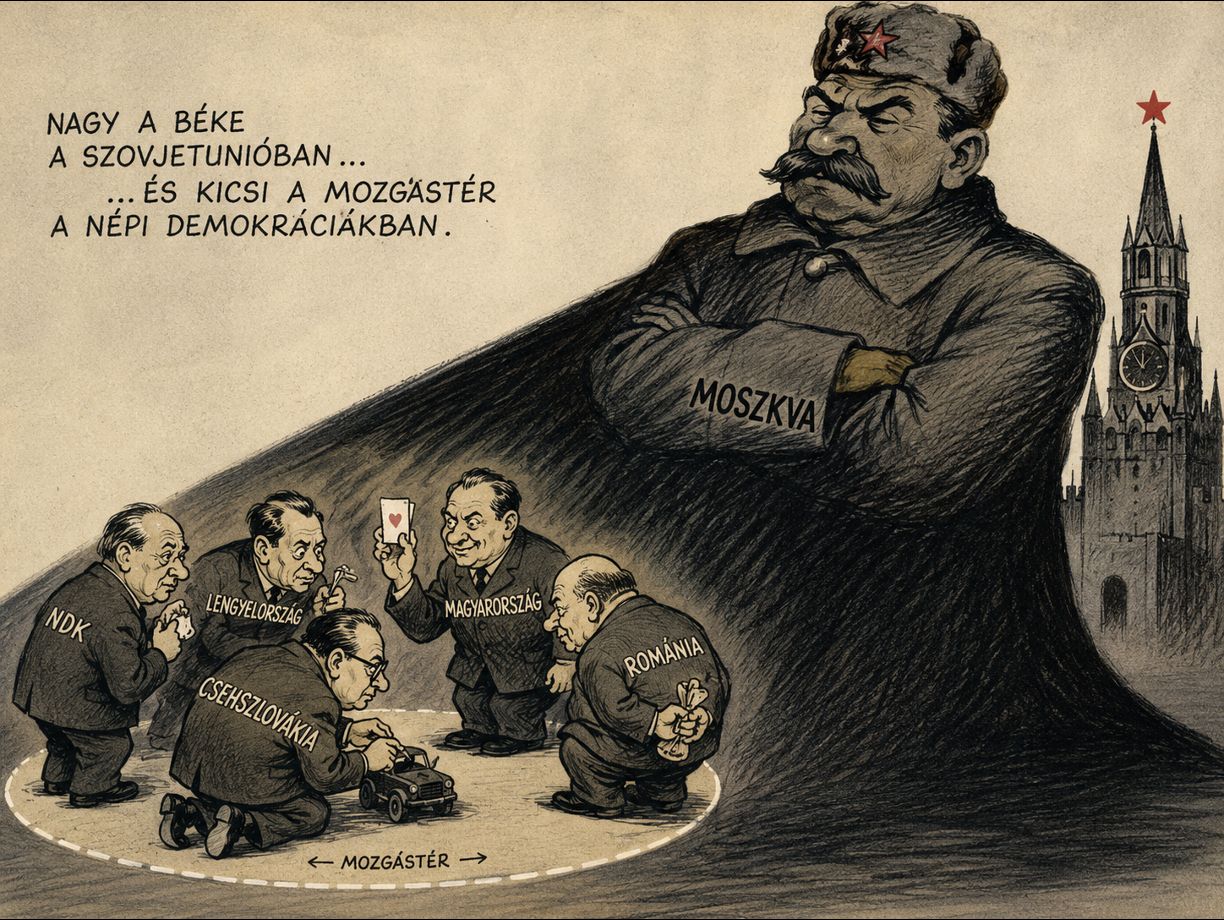
As part of the Soviet bloc, Hungary during the Kádár era was unable to engage in independent politics in many respects. However, this does not mean that national sentiment could not have been expressed in culture, albeit with certain topics being taboo.
During and after the change of regime, the opposition, primarily the völkisch opposition, and then among the emerging conservative political and intellectual groups, often criticized the Kádár era for the fact that the history and culture of the Hungarian people, and the understanding, acceptance, and strengthening of national sentiment in general, were alien to the official politics of the time. We tend to think of the Kádár era as one in which the ruling party hammered home the message of internationalism day and night and rejected everything that was part of the national heritage. The series of celebrations known as ’Revolutionary Youth Days’, which placed March 15 in a framework with the controversial April 4 (the “liberation” of 1945) and March 21 (the day the 1919 Soviet-type People’s Republic was proclaimed in Hungary). However, out of these, a significant portion of the Hungarian people could only identify with March 15.
The picture, however, is more nuanced than that. Those who had grown up during the Horthy era and reached adulthood under the Kádár regime, or simply compared the regime to Western democracies (where historical celebrations expressing the nation’s desire for freedom are not hidden behind a series of bogus celebrations, where one can speak honestly about historical traumas, the recent past, etc.), the ruling party’s relationship with the nation may have seemed truly empty. The system clearly saw itself as the pinnacle and culmination of Hungarian history, and this linear view of history predetermined its opinion of the old, pre-socialist eras, which had clearly been surpassed by history.
In the field of culture, Kádár’s policy sought to distance itself from the Stalinist-style cultural and educational policy characteristic of the Rákosi era, which hammered home dogmas and slavishly copied Soviet culture and education, often offending national sentiments. The issue was brought to the table of educational policy. A proposal dated February 1957 to the Ministry of Culture on the modification of the upper elementary school curriculum noted that, breaking away from previous decades, “in the teaching of literature and history, we must rely on the entire progressive heritage of our national past and culture,” “alongside our revolutionary poets and writers,” to include “Jókai, Gárdonyi, and Móra,” who had previously been relegated to a secondary role, “just as Széchenyi was put behind Kossuth.”
The authors emphasize that “peaceful development and periods of great transformation that brought about major changes, such as the early 19th century reform era, cannot be viewed in a one-sidedly negative light.” The proposal to replace the textbooks complained that the textbooks in circulation wrote disparagingly about national heroes. They cite Miklós Zrínyi as an example: the textbook in question “does not present him as a hero and outstanding military commander, a patriot who loved his country and sacrificed his entire life for it,” but as a profiteering nobleman. Regarding the Rákóczi War of Independence, they note: “The war of independence must be taught, but there is nothing about it in the book. Students would be justified in asking: what kind of war of independence is it in which the textbook does not mention a single gunshot?”
Kádár’s cultural policy was defined by György Aczél and his “three Ts” model. Prohibited or avoidable topics included the presence of the Soviet army in Hungary, questioning the dominant role of the party, or nuancing the role of the Hungarian army in World War II. As can be seen, many phenomena of modern history were not acceptable as literary or artistic themes for those in power.
However, Kádár’s cultural policy shifted in many respects toward a more realistic view of history than before. For example, it was during these decades that a realistic assessment of István Széchenyi began. The cultivation of the Széchenyi cult (which took the form of, for example, the association of workers’ brigades bearing his name), although strange for a socialist system, hardly expresses a turning away from national history. It is also true that Széchenyi was needed in part to oppose Kossuth, whose name did not sound so good after 1956 (see the question of the country’s coat of arms). Symbolically, the coat of arms introduced in 1957 was closer to the national coat of arms: the shield with the national tricolor bordered by two ears of wheat emphasized the national colours much more than the previous Rákosi (Stalinist) version. March 15 was allowed to be celebrated, albeit with mixed messaging, whereas during the Rákosi era it was an unmarked working day. In 1978, certain Hungarian leaders ceremoniously accepted the Holy Crown, which was returned by the United States.
In other words, attempts were made to use the national past and symbols to a certain extent, and film, art, etc. were allowed to use them, albeit obviously certain topics were taboo. It is true that there were major differences between the various socialist countries in this regard. While the Romanian leadership did indeed refer to the Daco-Roman continuity theory, in Hungary, theories that were scientifically questionable but fit into the chauvinistic argument were not supported. Romanian party leaders proudly referred to the Romanian monarchs who unified the country (Mihai Viteazul, Alexandru Ioan Cuza), the GDR referred to the values of the German Reformation, Enlightenment, Romanticism, and Socialism (emphasizing that “they” were not the heirs of “Nazi Germany,” unlike the FRG, which was treated as an enemy, but rather the people of Luther, Münzer, Schiller, Lassalle, and Rosa Luxemburg), while in the Soviet Union, the cult of Ivan the Terrible and Peter the Great in public life, while the cult of Suvorov and Kutuzov in cinema began to overshadow Lenin.
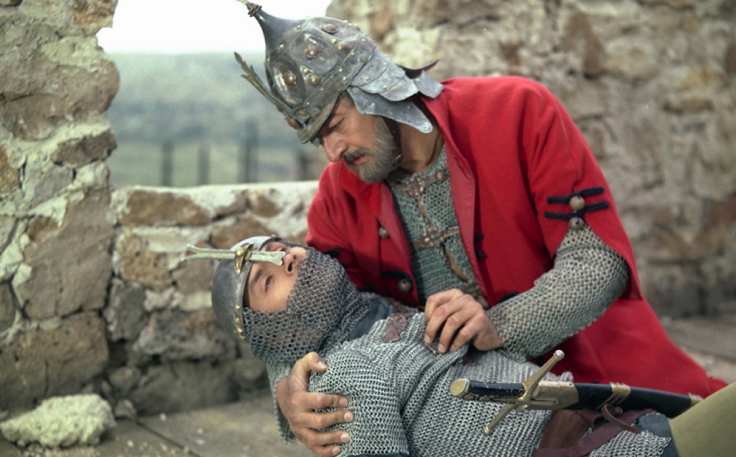
As far as Hungarian cinema is concerned, the Kádár era was the golden age of Hungarian historical films, especially in the 1960s. The Baron’s Sons, A Hungarian Nabob, Zoltán Kárpáthy, and Eclipse of the Crescent Moon evoked the glorious eras of Hungary’s past, while the first Hungarian television series, A Tenkes kapitánya (The Captain of Tenkes) presented the Kuruc era with a great deal of humor and folk tale elements (typically, in this work, the main enemy was not the exploitative Hungarian landowner who was obligatory in earlier films, but a foreign, German colonel). Incidentally, this was not unfamiliar in the cinema of other socialist countries either. Romanian cinema released a bombastic film for every anniversary, and even the most servilesoviet satellite state, the GDR preserved the traditions: in 1983, the anniversary of Martin Luther’s birth was celebrated with unprecedented pomp. But there were also counterexamples: the film adaptation of Sienkiewicz’s novel With Fire and Sword was blocked by Polish censors because its theme was the Polish-Cossack (by – generous – association: the Polish-Ukrainian conflict), while there was no such problem with the second volume of the trilogy, The Deluge, which is about the Polish-Swedish war, seamlessly turned into a work of patriotic pathos. In Hungary, the 1960s and 1980s saw a series of film adaptations of novels by Mór Jókai, Kálmán Mikszáth, Géza Gárdonyi, Ferenc Móra, and Magda Szabó. Let us not forget that in 1983, the rock opera István, a király (Stephen, the King) was premiered, which, although it allowed for different interpretations, fit into the trend of the system becoming open to historical genres. The accusation of unpatriotic behavior is therefore not valid in criticizing the cultural policy of the Kádár regime.
Common past: knowledge to dispel historical misconceptions – supporting the work of Slovak and Hungarian history teachers through print and online publications, professional conferences. A project of the Association of History Teachers and the Hungarian-language newspaper of the Denník N news portal. (2023-2-HU01-KA210-SCH-000169882)
Funded by the European Union. The information and statements contained herein are those of the author(s) and do not necessarily reflect the official views of the European Union or the Tempus Public Foundation. Neither the European Union nor the funding authority can be held responsible for them.