

Claim
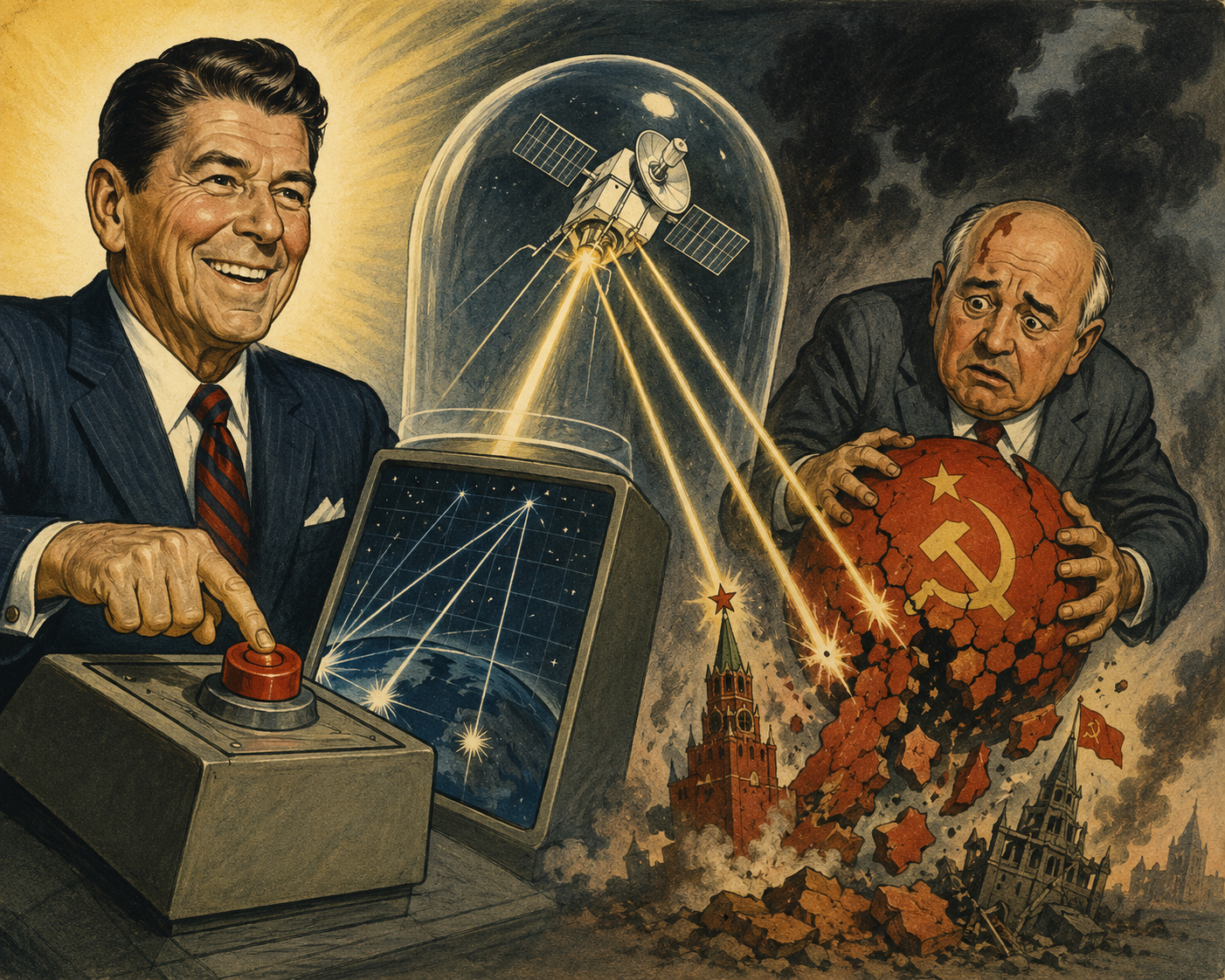
The Soviet Union collapsed because of President Ronald Reagan’s Strategic Defense Initiative (SDI), commonly known as the “Star Wars” program.
Short Refutation
The Strategic Defense Initiative certainly placed significant pressure on the Soviet leadership and contributed to Mikhail Gorbachev’s shift in foreign policy. However, it did not, by itself, cause the collapse of the Soviet Union. The Soviet empire ultimately fell because of a combination of long-term economic stagnation, the unintended consequences of reform, rising nationalist tensions, and the internal crisis of the Soviet political system.
Explanation
One of the most persistent Cold War myths holds that President Ronald Reagan brought the Soviet Union to its knees with a single masterstroke. According to this interpretation, the Strategic Defense Initiative (SDI), announced in 1983 and popularly known as the “Star Wars” program, launched an arms race so costly that the Soviet economy could no longer keep pace, causing the communist system to collapse within a few years.
The reality is considerably more complex.
There is no doubt that the SDI had a profound impact on Soviet strategic thinking. The program promised that the United States might eventually deploy a space-based missile defense system capable of neutralizing the Soviet nuclear deterrent. Had such a system become operational, it would have fundamentally challenged the strategic balance between the two superpowers.
By the early 1980s, however, the Soviet Union was already facing severe economic difficulties. Economic growth had been slowing since the 1970s, technological backwardness was becoming increasingly apparent, and military expenditures remained exceptionally high. Under these circumstances, embarking on yet another costly arms race became increasingly difficult. Rather than attempting to match the United States with comparable technological developments, Moscow primarily sought to prevent the implementation of the SDI through diplomatic and political means.
This helps explain why, after coming to power in 1985, Mikhail Gorbachev pursued an unprecedented series of negotiations with Reagan. His objective was to create an international climate in which neither the American public nor U.S. policymakers would consider continued funding for the enormously expensive missile defense program politically justified. Arms control negotiations and the improvement of East–West relations therefore formed part of this broader strategy.
This does not mean, however, that the SDI “bankrupted” the Soviet Union. Throughout the 1980s, the program remained largely in the research and development phase, while its technological feasibility was highly uncertain. In the end, the United States never implemented the original concept in its entirety.
The causes of the Soviet Union’s collapse were far deeper. The centrally planned economy had been losing efficiency for decades, declining oil prices reduced vital hard-currency revenues, public dissatisfaction continued to grow, and ethnic and nationalist conflicts intensified. At the same time, Gorbachev’s reforms—perestroika and glasnost—set in motion political processes that the Soviet leadership ultimately proved unable to control.
Moreover, Western governments were not preparing for the rapid collapse of the communist regimes. In 1989, the leaders of the United States and Western Europe were primarily concerned with preserving stability. They feared that overly rapid political change could trigger chaos, economic collapse, or even armed conflict in Eastern Europe. As a result, they often sought to moderate the pace of political transformation rather than accelerate it.
The “Star Wars” program was therefore an important factor during the final years of the Cold War. It contributed to Gorbachev’s decision to pursue cooperation rather than confrontation and helped accelerate arms control negotiations. Nevertheless, the collapse of the Soviet Union was not the result of a single American initiative, but rather of the combined effects of multiple economic, political, and social crises.
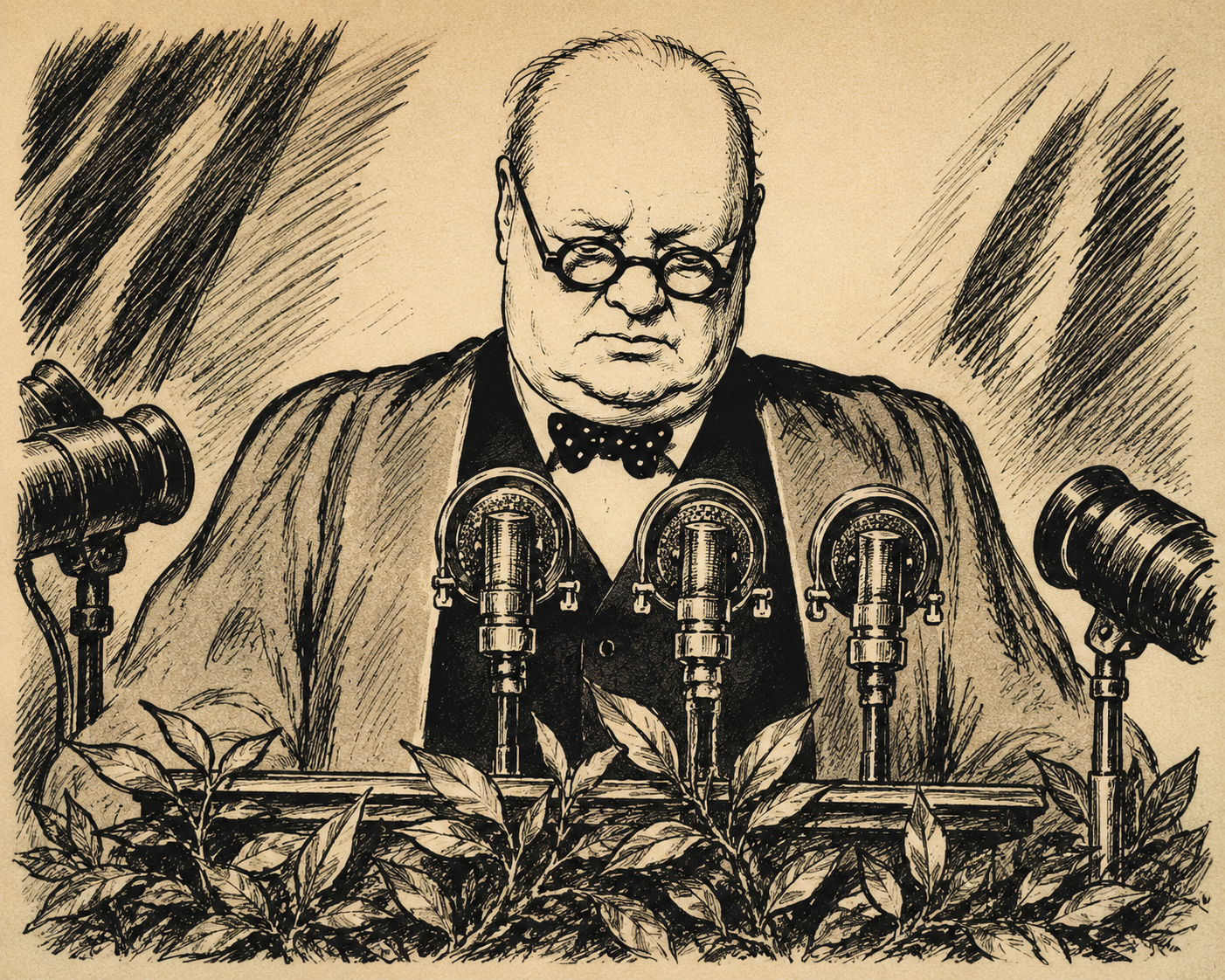
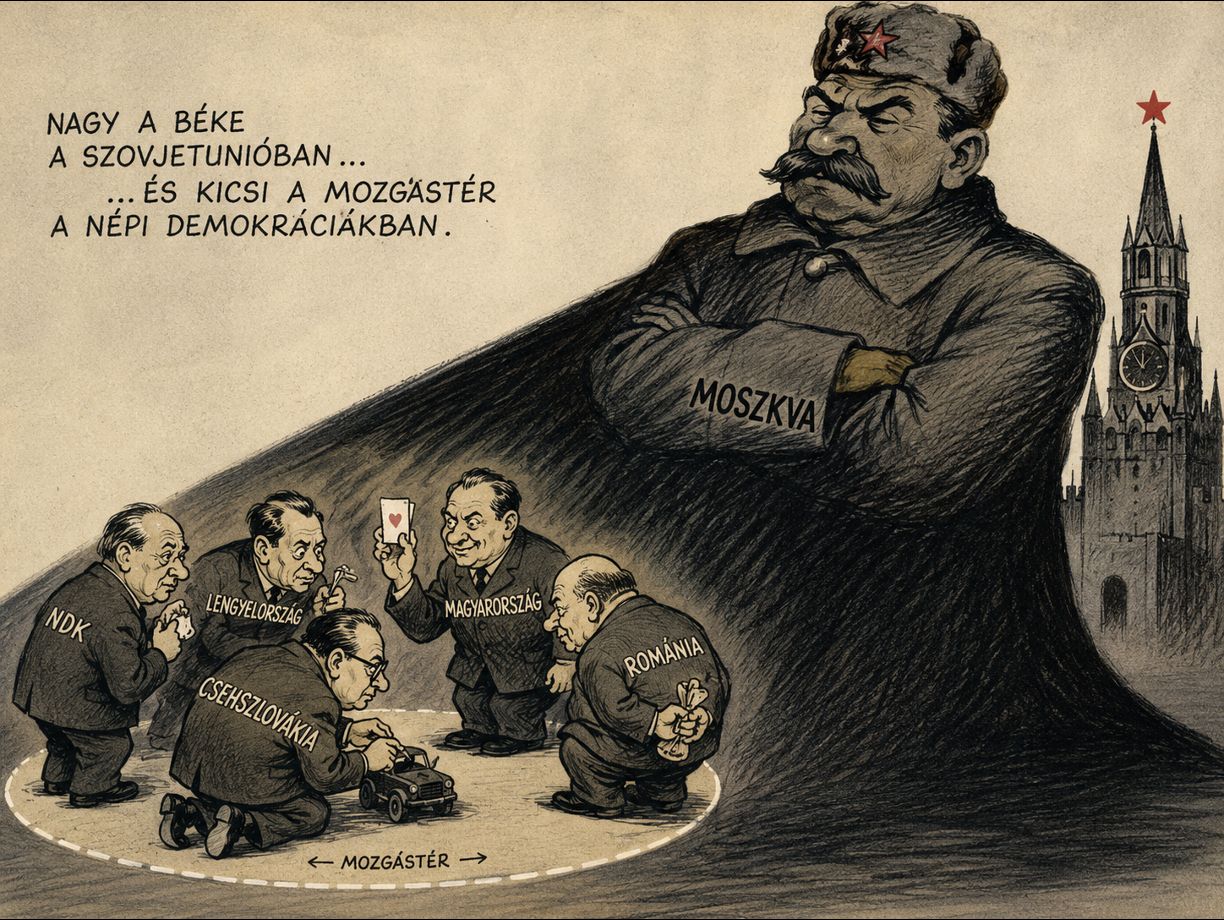
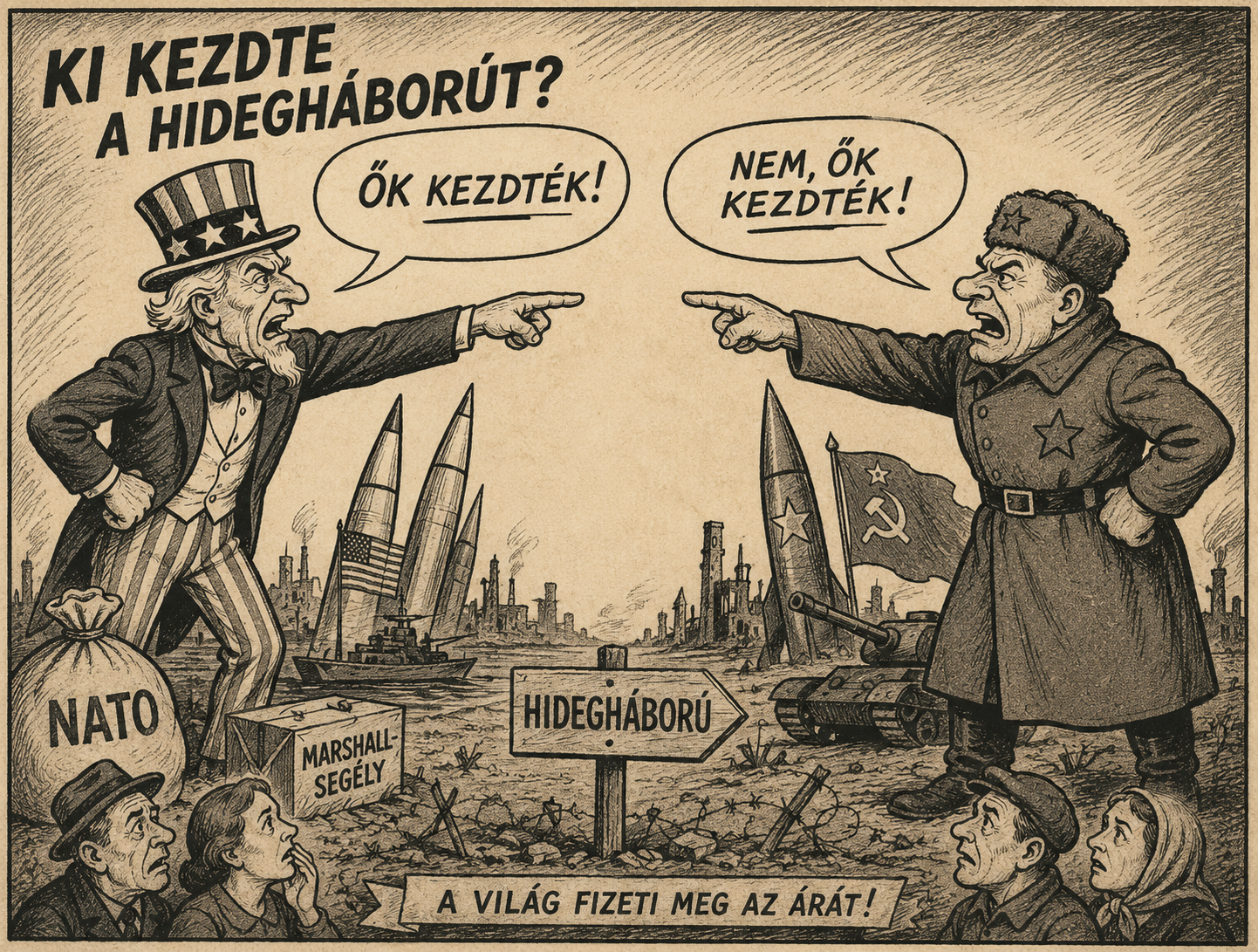
The cover image is intentionally playful: created with the assistance of ChatGPT, it simultaneously evokes the iconic visual language of the Cold War while subtly subverting the familiar imagery and clichés of 1950s propaganda with a touch of irony.